2028 presidential candidate attends Capitol press conference and House Judiciary Committee hearing as bipartisan coalition pushes for reform of Pennsylvania's child-custody system
HARRISBURG, PA — October 5, 2026
John Damms, a registered candidate for President of the United States in 2028, joined legislators, parents, grandparents and family-court reform advocates at the Pennsylvania State Capitol on Monday in support of House Bill 1499, legislation sponsored by state Rep. Jamie Flick that would significantly reform Pennsylvania's child-custody laws.
Damms participated in the morning press conference on the steps of the Main Capitol Rotunda before attending the Pennsylvania House Judiciary Committee's public hearing on HB 1499.

Supporters of Pennsylvania House Bill 1499 gather at the Pennsylvania State Capitol in Harrisburg ahead of the House Judiciary Committee hearing on shared-parenting legislation, October 5, 2026.
The hearing marked a significant moment for legislation that has remained before the Judiciary Committee since May 2025. HB 1499 has attracted 78 bipartisan co-sponsors, while a grassroots petition supporting the legislation has collected more than 2,800 signatures, according to Flick's office. More than 100 supporters packed the hearing, which lasted more than two hours. Pennsylvania House Republican Caucus
For Damms, however, the issue is more than legislation.
It is personal.
“I've experienced firsthand how difficult the family-court system can make it for a parent who simply wants to remain an active and meaningful part of his child's life. There are mothers and fathers across Pennsylvania and across this country who have spent years fighting simply to remain parents. Children deserve better.”
Kids Need Both
HB 1499 would establish a rebuttable presumption favoring shared physical custody, shared legal custody and approximately equal parenting time when parents are willing, fit and able.
The legislation represents an effort to change the starting point in Pennsylvania custody proceedings while retaining mechanisms for courts to consider circumstances in which equal custody would not be appropriate.
Supporters filled the Capitol Rotunda carrying signs declaring “KIDS NEED BOTH” and “HOUSE BILL 1499 — FAIRNESS FOR FAMILIES.”
Rep. Flick described the legislation's message as ensuring children have access to safe, fit and loving parents. Pennsylvania House Republican Caucus
Damms agrees that the principle extends beyond fathers' rights.
“This isn't men against women or fathers against mothers. There are fathers who have been pushed out of their children's lives, and there are mothers who have experienced the same thing. This is about children having meaningful relationships with both fit parents.”
A Bipartisan Effort
One of the most significant aspects of HB 1499 is the breadth of its political support.
The bill's 78 co-sponsors include Republicans and Democrats, making family-court reform an issue that has crossed traditional partisan lines in Harrisburg. Pennsylvania House Republican Caucus
Jeff Steiner, executive director of the Dads' Resource Center, emphasized during the Capitol event that supporters view shared parenting as a nonpartisan issue centered on improving outcomes for Pennsylvania children.
Other speakers included family advocates, legal experts and representatives of organizations supporting shared parenting and judicial reform. Pennsylvania House Republican Caucus
Damms said that bipartisan cooperation is particularly important on an issue affecting families regardless of political affiliation.
“Republicans don't own parental rights. Democrats don't own parental rights. Children certainly don't belong to a political party. When an issue affects families this deeply, we should be able to sit at the same table and work toward solutions.”
More Than Two Hours of Testimony
The House Judiciary Committee hearing presented sharply different perspectives on HB 1499.
Supportive testimony included Kentucky Circuit Judge Mica Wood Pence, whose state enacted equal-parenting legislation in 2018. Pence discussed her experience with Kentucky's system and told lawmakers she has observed parents working together to make decisions for their children.
Opponents raised concerns involving domestic violence, child safety, the proposed presumption of approximately equal parenting time and the relationship between HB 1499 and Pennsylvania's recently revised custody factors.
According to Flick's post-hearing report, seven of eight panelists brought in to oppose HB 1499 opposed the legislation. Flick responded that changes to Pennsylvania's custody factors occurred after HB 1499 was originally drafted and said those factors have been addressed in a recent amendment. Pennsylvania House Republican Caucus
Damms said he listened to the opposing testimony but remains convinced that Pennsylvania needs substantial family-court reform.
“Concerns involving domestic violence, abuse and child safety deserve to be taken seriously. Protecting victims and protecting children must always remain part of the law. But I fundamentally disagree with the idea that protecting children from abuse and beginning with the presumption that two safe, fit parents should both remain meaningfully involved in their child's life are incompatible goals. We can do both.”
Judicial Accountability Must Be Part of Family-Court Reform
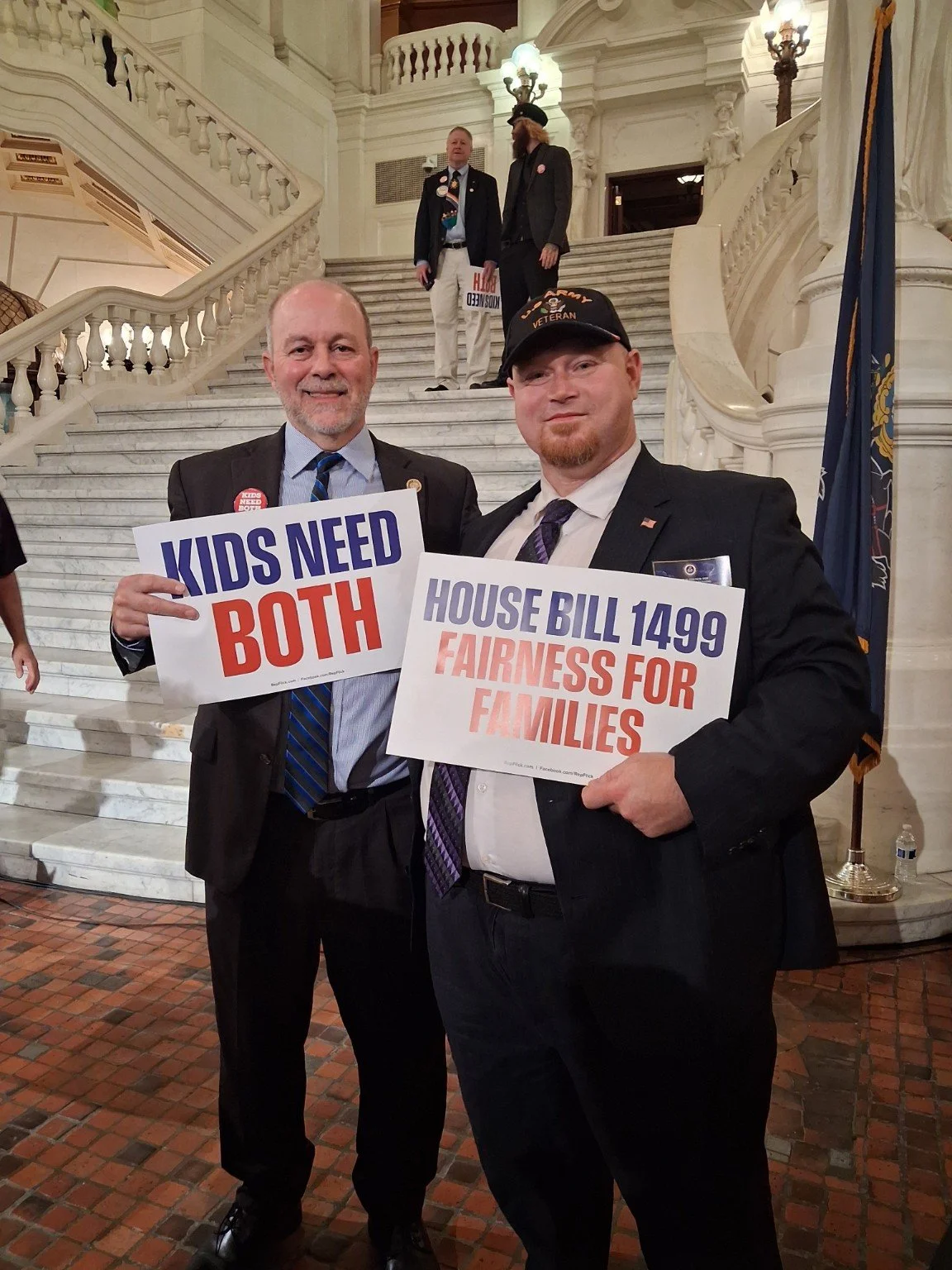
John Damms and Pennsylvania State Rep. Jamie Flick, prime sponsor of HB 1499, at the State Capitol during the October 5, 2026 press conference and House Judiciary Committee hearing on shared-parenting reform.
For Damms, equal parenting is only part of a broader issue.
His position on family-court reform also emphasizes judicial accountability, due process and transparency.
During the hearing, Republican Judiciary Committee Chairman Rob Kauffman, a co-sponsor of HB 1499, discussed reports concerning inconsistent judicial decision-making. Rep. George Margetas similarly argued that custody outcomes can depend too heavily upon the discretion of the individual judge assigned to a case. Pennsylvania House Republican Caucus
Damms believes custody decisions carrying lifelong consequences for children and parents require meaningful accountability.
“Judges have enormous authority in family court. With enormous authority must come accountability. Decisions that can fundamentally alter the relationship between a parent and child should be based on evidence and law, and parents deserve a clear record explaining why those decisions were made.”
Damms stressed that judicial accountability should not mean attacking judges simply because a litigant dislikes an outcome.
“Accountability means the law matters. Evidence matters. Due process matters. Judicial ethics matter. And when misconduct actually occurs, there must be a meaningful process for addressing it. No public official should be beyond accountability.”
The Reality Inside Family Court
Damms said attending the Judiciary hearing reinforced his belief that policymakers must continue hearing directly from people who have personally experienced prolonged custody litigation.
His own experience has included years of custody litigation and a disputed parental relocation that he says substantially increased the distance between him and his daughter and made maintaining the parent-child relationship more difficult.
“You can read statutes, studies and legal arguments all day long. But lawmakers also need to hear from parents who have actually sat inside family courtrooms and lived with these decisions for years.”
He added:
“Distance can become a tremendous obstacle between a parent and child. Parents should never be intentionally pushed toward the point where maintaining that relationship becomes so exhausting, expensive or difficult that they simply give up.”
Damms said he has encountered parents who eventually stopped fighting after years of litigation.
He has no intention of doing so.
“I will never quit being my daughter's father. That's never been an option.”
Opposition Remains
Following the hearing, House Judiciary Committee Chairman Rep. Tim Briggs publicly expressed opposition to HB 1499 in its current form.
Briggs said meaningful relationships with both parents can be important and acknowledged that shared custody may be appropriate for many families, but argued that custody determinations should remain individualized. He cited concerns involving domestic violence, abuse, children's special needs, stability and other circumstances.
Organizations including the Pennsylvania Coalition Against Domestic Violence, Women's Law Project and Pennsylvania Psychological Association also raised concerns during testimony. PA House
Damms believes those concerns should remain part of the legislative discussion while rejecting the idea that they eliminate the need for reform.
“We should listen to legitimate concerns, strengthen legislation where necessary and protect children from dangerous situations. But we also cannot ignore parents and children who have been harmed by the existing system. Reform and child safety should never be treated as mutually exclusive.”
HB 1499 Has Not Advanced — But the Fight Continues
The Judiciary Committee did not vote HB 1499 out of committee following the October 5 hearing.
As of October 6, the official Pennsylvania General Assembly record continues to list the bill as referred to the House Judiciary Committee, with no recorded votes on the legislation. The October 5 public hearing has been added to the bill's official legislative history. PA General Assembly
That means HB 1499 has not passed, but it has not disappeared either. It remains before the Judiciary Committee.
Damms said the hearing demonstrated that the conversation surrounding Pennsylvania family-court reform is far from finished.
“Yesterday wasn't the end of anything. More than 100 people came to the Capitol. Seventy-eight legislators from both parties have put their names behind this legislation. Parents, grandparents and advocates showed up because this matters to their families.”
“I'll continue standing with parents who believe the system needs reform. Kids need both safe, fit and loving parents, and parents deserve a family-court system built on evidence, due process, transparency and accountability.”
Family-Court Reform and Agenda 48
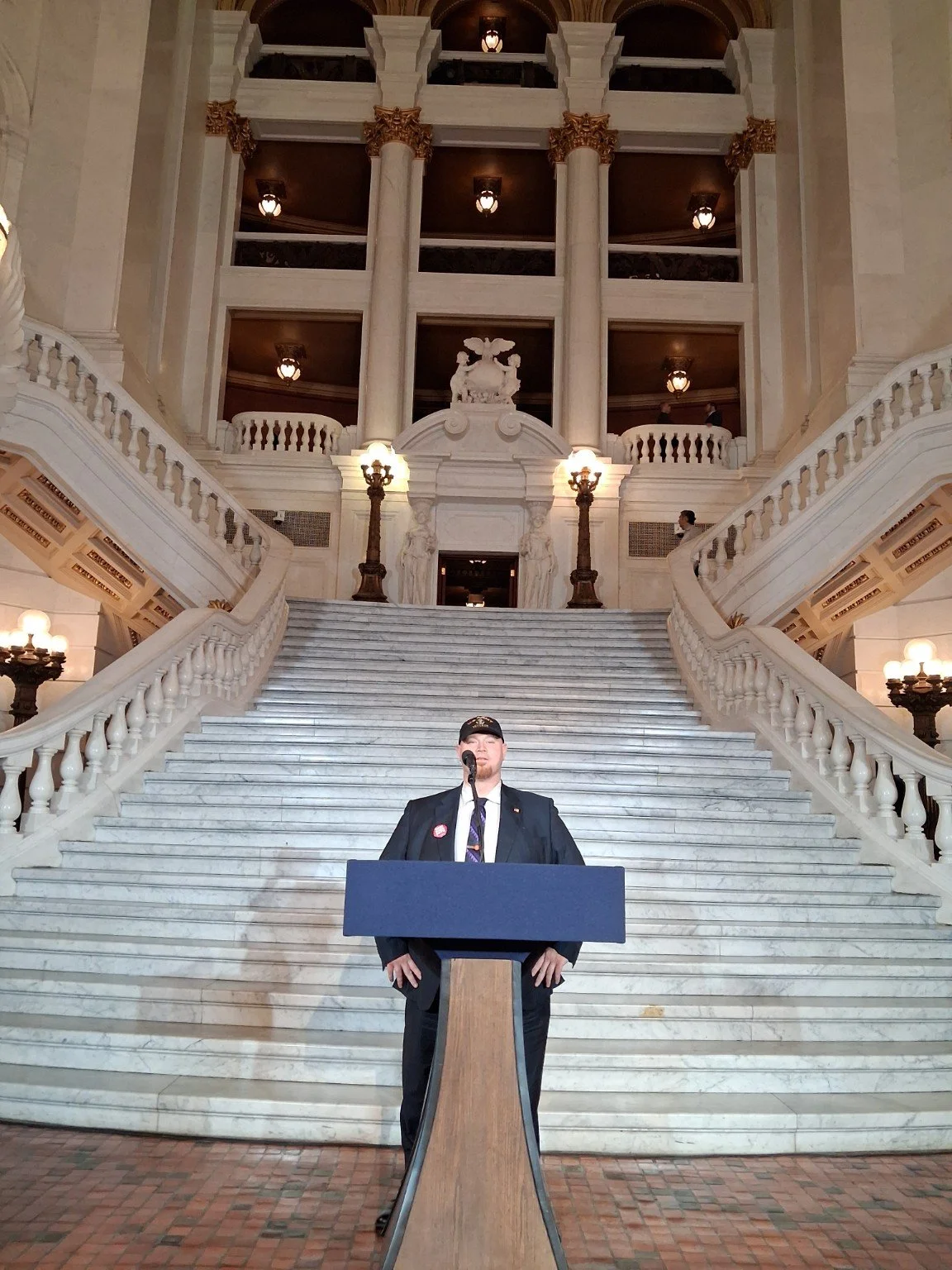
John Damms at the Pennsylvania State Capitol on October 5, 2026, as he continues developing family-court reform as part of his Agenda 48 platform.
As Damms continues developing Agenda 48, his platform for the 2028 presidential campaign, parental rights, family-court reform and judicial accountability will remain central issues.
Damms recognizes that custody law is primarily governed by the states, but believes constitutional protections, due process, judicial accountability and the preservation of parent-child relationships deserve a broader national conversation.
“There are limits to what a president can or should dictate to state family courts. I respect those constitutional boundaries. But there is absolutely a role for national leadership in defending due process, examining constitutional protections, encouraging transparency and bringing attention to families who believe the system has failed them.”
For Damms, October 5 was another step in that effort.
“I was proud to stand in Pennsylvania's Capitol alongside Republicans, Democrats, parents, grandparents and advocates who believe we can build a better system. We may disagree about exactly how reform should look, but doing nothing cannot be the answer.”
